
In the dynamic and competitive world of luxury hotels and wellness, every detail helps to define the customer experience. The choice of textiles is no exception, representing a crucial element that directly affects comfort, hygiene and the perception of quality. Faced with the wide range of options available, industry operators often find themselves pondering a fundamental question: cotton terry or microfiber? This is not a simple matter of preferences, but a strategic decision that affects operating costs, environmental impact and, above all, guest satisfaction.
Understanding the properties and applications of both materials helps hospitality and wellness buyers select suitable textiles. From soft bathrobes in premium suites to practical fitness and spa towels, each textile has a role. This guide compares their advantages and limitations for professional use. Explore our Hotel linen collection.
Table of contents
1. Cotton terry towels: comfort and performance
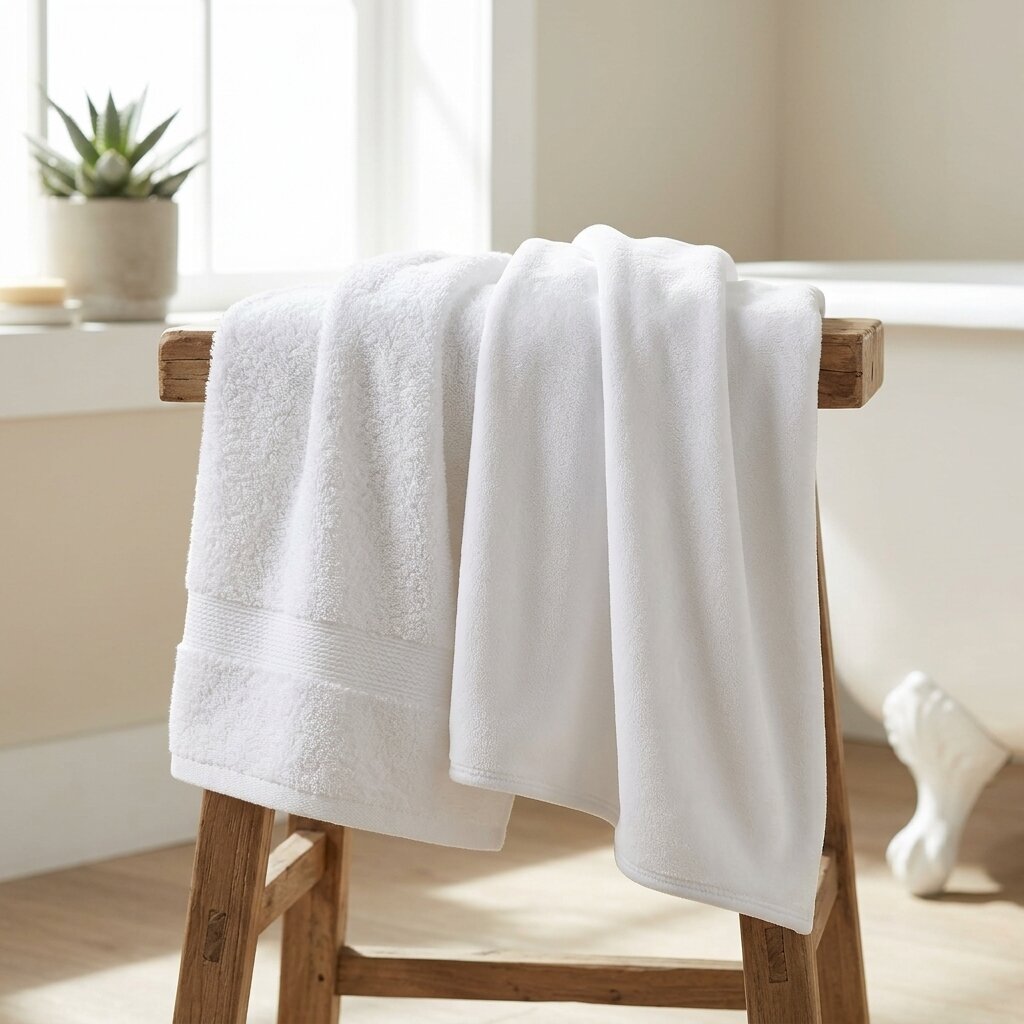
Cotton terry is a classic choice for comfort and absorbency. Its characteristic woven loops create a soft, voluminous surface against the skin. The loops also increase the fabric's surface area, supporting water absorption.
Cotton's moisture-absorbing properties make terry towels and bathrobes well suited to drying the body. Quality yarns and suitable woven constructions, including long-staple cotton and two-ply yarns, support softness and durability in hospitality use.
1.1 Advantages and disadvantages of cotton terry for professional use
For hotels and wellness businesses, cotton terry offers several advantages:
- Comfort and luxury: The softness and volume of cotton terry contribute to a premium guest experience.
- High absorbency: Ideal for drying the body effectively after showers, baths or spa treatments.
- Aesthetics: Cotton terry offers a refined, traditional appearance and can be customised with logos and borders.
However, there are also some important considerations:
- Drying times: Cotton terry fabrics, particularly higher GSM towels, generally take longer to dry after use and laundering.
- Weight and size: They are heavier and more voluminous than microfiber, with implications for storage and transport and washing costs.
- Maintenance: They require specific attention to maintain softness and avoid felting.
2. In-depth microfiber analysis: Efficiency and innovation
Microfiber is a synthetic fabric, usually a mixture of polyester and polyamide (nylon), characterized by extremely thin fibers, thinner than a human hair. This ultra-fine structure gives the fabric unique properties, making it an excellent choice for applications where efficiency and practicality are a priority.
Microfiber is available in various constructions, including looped fabrics. Spaces between fine filaments promote capillary action, while composition and structure determine water absorption and retention. Lightweight, compact constructions can be practical when bulk and drying speed matter, for example in textile supplies for swimming pools and spas Or for gyms.
2.1 Advantages and Disadvantages of Microfiber in B2B
For industry operators, microfiber offers distinctive benefits:
- Quick drying: Lightweight constructions may dry faster than heavy terry, with potential benefits for linen turnover and laundry management.
- Lightness and compactness: Less bulky and lighter, it facilitates storage and transport, and is perfect for travel kits or gym towels.
- Strength and Durability: Wear resistance and dimensional stability depend on composition, construction and care methods.
- Cleaning efficiency: Microfibers can be used in professional cleaning cloths to collect dust and dirt from surfaces; these should be separate from guest towels.
Despite its many advantages, it is also important to consider the following aspects:
- Tactile Feeling: Some guests may find the microfiber feel less “natural” or luxurious than the traditional cotton terry.
- Synthetic origin: Being a petroleum derivative, it raises environmental issues related to the production and release of microplastics during washing, although innovative and recycled solutions exist.
- Starting price: In some cases, the initial price may be slightly higher than basic cotton terry; compare actual service life, laundry costs and conditions of use.
3. When to choose cotton terry or microfiber towels
Cotton terry and microfiber need not be mutually exclusive. A professional textile collection can combine both materials according to the requirements of each area of a hotel or wellness centre.
3.1 Best applications for cotton terry
Cotton terry is particularly suitable where softness, comfort and a premium appearance are priorities:
- Hotel rooms and suites: High-quality cotton terry face towels, hand towels, shower towels and bath sheets contribute to a premium guest experience.
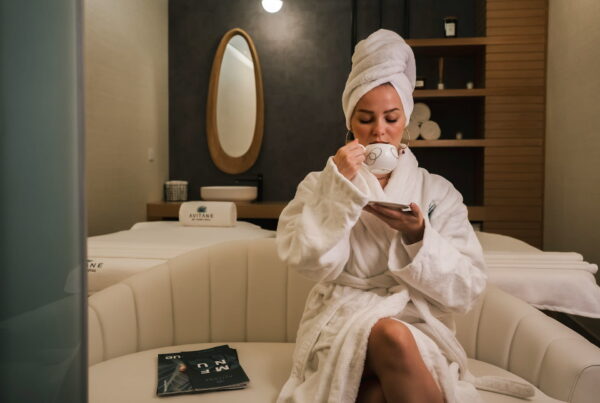
- Relaxation areas of spas and wellness centers: Bathrobes and generous towels for use after treatments, in saunas and steam rooms, where warmth and comfort matter.
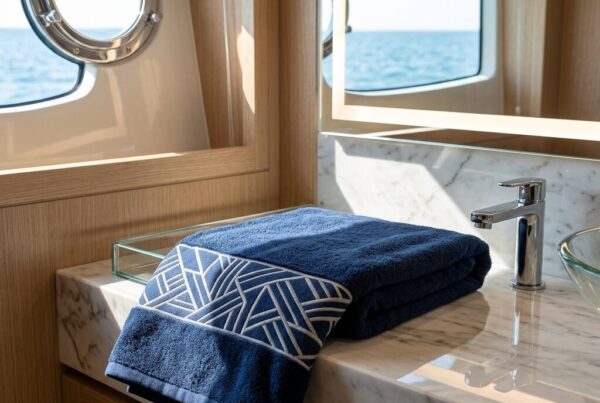
- Luxury boating: La nautical linen often favours cotton terry for comfort and elegance aboard luxury yachts.
- Swimming pools with lounge areas: Large-format pool towels that offer superior comfort during relaxing moments.
3.2 Ideal applications for microfiber
Microfiber finds its ideal space in contexts where functionality, speed and hygiene are crucial:
- Fitness areas and gyms: Towels for training, where lightness, speed of drying and the ability to absorb sweat are essential.
- Spa and beauty centers (technical areas): Towels for massage tables, cloths for cleaning surfaces or for specific beauty treatments that require precision and hygiene.
- High-turnover environments: Where textiles are washed and reused very frequently and the reduction of drying times and operating costs is crucial.
- Travel and Sports: For customers looking for practicality and minimal bulk.
In summary, the choice must be carefully considered considering the intended use, the customer's profile, the image you want to communicate and the efficiency of logistics and laundry management.
Why choose ZA&BEL professional textiles for your business
Since 1969, Tessitura ZA&BEL has manufactured Italian-made terry at its own weaving mill in Busto Arsizio. We develop professional cotton textiles with single or two-ply yarns, GSM, sizes, colours and finishes tailored to customers' requirements. For our own coloured production, we exclusively use Indanthrene dyes, selected for colourfastness to light and frequent laundering. Our range includes bespoke towels, bath sheets, bathrobes and bath mats with jacquard, Lancé, embroidery, borders and logos. We work with luxury five-star hotels, resorts, spas and independent family-run properties, including smaller quantities where feasible. Complementary microfiber products can be assessed through import/export supplies with separately identified origins. Sampling allows comparison of hand feel, weight, absorbency and construction before specifying the linen range.
The right choice of textile depends on the application: the softness of cotton terry for premium suites and the practicality of microfiber for selected wellness and fitness uses. Fabric quality contributes to the overall guest experience.
Do not leave such a crucial aspect to your business to chance. Rely on ZA&BEL's experience and innovation to raise the standards of your professional linen. Contact us for a personalized consultation and find out how we can support you in choosing the right materials for your needs.
Request a ZA&BEL consultation