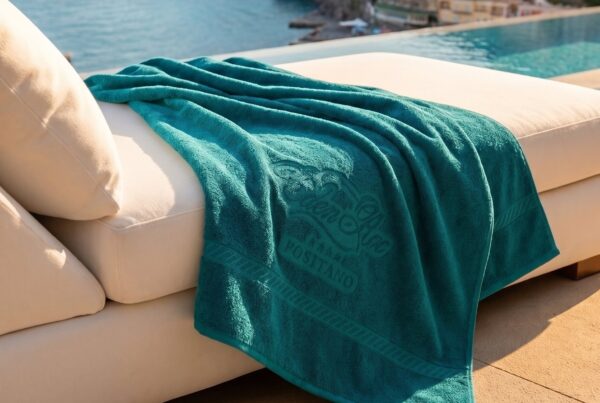

The professional towel, an essential element in any prestigious accommodation or wellness center, is not a simple piece of fabric. It is the result of a complex and refined process, where every phase, from the selection of the raw material to the finishing, is crucial to guaranteeing superior performance, exceptional durability and an inimitable sensory experience for the guest. Fully understanding how a professional towel is born means appreciating the intrinsic value of a product that must withstand hundreds of industrial washes while keeping its qualities of softness, absorbency and stability intact. For those who work in the luxury hospitality sector, from boutique hotels to exclusive spas, the choice of textiles is a fundamental business card. A towel is not only functional, but actively contributes to the atmosphere and the perception of care and attention that you want to transmit. you Production towels Intended for these contexts, it requires very high quality standards, well beyond those of common domestic use, placing the emphasis on robustness, hygiene and long-lasting comfort. It is a strategic investment that directly affects customer satisfaction and the operational efficiency of the structure, ensuring excellence in hotel linens which translates into prestige and reputation. THIS WE DEEP TOGETHER THE PATH THAT TRANSFORMS SIMPLE FIBERS INTO A PROFESSIONAL TOWEL, REVEALING THE SECRETS OF A AN AVENTUREMENT PRODUCTION CHINESE THAT COMBINES ARTISAN TRADITION AND TECH.
Table of Contents
1. The raw material: Cotton and its selection
The quality of a professional towel starts from the fiber. Cotton, by virtue of its softness, absorbency and resistance, is the favorite choice. However, not all cotton is the same. For high-end textile supplies, specific varieties and processes are favored:- Long-staple cotton cotton (long-staple cotton): Cottons such as the Egyptian or Pima are renowned for their exceptionally long fibers. This allows you to create more resistant, smooth and less protruding yarns, reducing the tendency to pilling and increasing the durability and softness of the finished fabric.
- Double Twist Yarn: The yarn is not a single fiber, but a set of twisted fibers. Double twist implies that two single yarn ends are twisted together to form a more robust and compact yarn. This gives the fabric greater resistance to abrasion, frequent washing cycles and better dimensional stability.
- Grammage (GSM – Grams for Square Meter): Although not a feature of the yarn itself, weight is a crucial indicator of the density of the fabric. Luxury professional towels generally have a high weight (often more than 450-500 gsm), which results in greater absorbency, thickness and a feel of luxury and body.
1.1 Cotton Spinning and Spinning
Once harvested, the raw cotton undergoes several cleaning steps to remove impurities and seeds. After that, the fibers are carded or combed. Combing is a finer process that eliminates shorter fibers and aligns long ones, producing an even smoother, shiny and durable yarn. This process is essential for creating high quality sponge fabrics. The combed fibers are then transformed into yarn through a spinning process, where they are twisted to form the thread that will then be used in the weaving.2. From yarn to fabric: The magic of weaving
After spinning, the yarns are ready to be transformed into sponge fabric, a process that requires specific machinery and high precision to create the characteristic ring surface.- Jacquard or frame weaving: Modern looms, often equipped with jacquard technology, simultaneously weave the base of the towel and the curls (or “loops”) that give it absorbency. There are two main types of yarns in the sponge weaving process:
- The Fund (Ground Weft/Warp): The warp (vertical) and weft (horizontal) yarns that make up the basic structure of the fabric, giving it strength.
- The Hair (Warp Stacks): Warp yarns that are raised to form curls on the surface. The density and length of these curls directly affect the absorbency and softness of the towel.
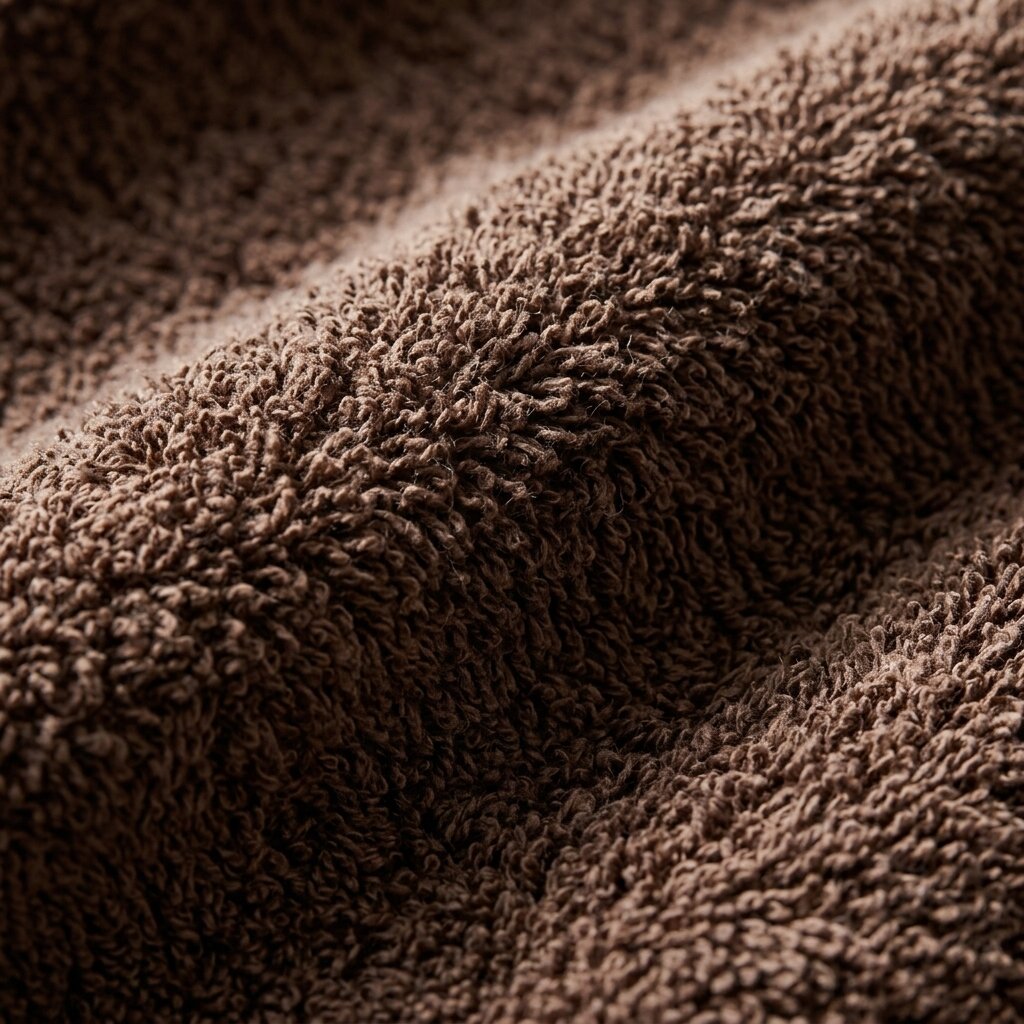
- The secret of curls: The sponge weaving technique creates these soft rings, which greatly increase the surface of the fabric, allowing it to absorb a greater amount of water. The uniformity and density of these curls are key indicators of the quality and performance of the final product. A well-formed, anchored curl reduces fraying and ensures longer life.
- Edge and selvedge finishes: During weaving, it is essential that the edges of the towel are reinforced to prevent fraying. The side edges (selvedges) are often woven thicker, while the headboards can be reinforced with a double seam or a sturdier hem during the packaging phase. This detail is vital for the longevity of the cloth, especially in contexts where the underwear is subjected to intensive washing. For facilities looking for high quality supplies, such as textile supplies for swimming pools and spas, these details make the difference in terms of resistance and presentation.
3. Finishing, packaging and special treatments for the B2B sector
After weaving, the raw fabric undergoes a series of treatments and finishing processes that enhance its properties and prepare it for professional use. This phase is crucial for the softness, stability and resistance to intensive life cycles typical of B2B.3.1 Dyeing and Bleaching
The fabric is washed to remove processing residues and then bleached, an essential step to obtain the desired pure white or to prepare the fabric for the dye. Dyeing is a delicate process: For professional linen, high quality reactive dyes are used that guarantee maximum color fastness, resisting fading even after numerous high-temperature washes and the use of aggressive detergents. The precision in the dye ensures that the color remains uniform and shiny over time.3.2 Drying and trimming
After dyeing or bleaching, the fabric is dried carefully to avoid excessive shrinkage. Topping is a process in which the surface of the fabric is shaved to remove the most protruding fibers, making the towel smoother and reducing pilling. This also helps to improve the softness to the touch.3.3 Packaging and quality control
The fabric by the foot is cut to the desired size and edged. The hems are made with sturdy and multiple seams to prevent fraying and ensure that the towel maintains its shape even after mechanical and thermal stress. It is in this phase that labels are added and, on request, customizations such as embroidery, logos or woven (jacquard) designs. Each piece undergoes rigorous quality controls to verify compliance with precise standards in terms of weight, absorbency, color fastness, dimensional stability and integrity of the seams. for industrial laundries And the structures that use them, resistance to these processes is essential.3.4 Special treatments
To meet the specific needs of the B2B industry, professional towels can receive special treatments:- Sanitation: Antibacterial or antifungal treatments that guarantee a higher hygienic level.
- Chlorine Resistance: Essential for swimming pools and spas, where linen is exposed to aggressive chemicals.
- Anti-shrink treatments: To ensure that the towel maintains its original shape and size even after repeated industrial washing.
Why Choose ZA&BEL Professional Sponges for Your Business
For over fifty years, ZA&BEL has embodied excellence in the production of professional textiles. With deep roots in the textile district of Busto Arsizio, our history, which began in 1969, is a guarantee of authentic and very high quality “made in Italy”. Every sponge that comes out of our factories is the result of a careful selection of yarns: We choose only long fiber cotton and double twisted cottons, to ensure unparalleled resistance and a softness that resists time. Our linen is designed to tackle intensive industrial washing cycles, maintaining total dimensional stability and certified resistance, crucial elements for the sustainability and efficiency of your business. We also offer an impeccable tailoring service, which allows you to enhance the identity of your brand, and punctual and reliable logistics, to always guarantee you maximum peace of mind. Choosing ZA&BEL means investing in a partner that understands your needs and transforms them into higher value textile products.The professional towel is much more than an accessory: It is a key element of the experience you offer to your guests. A superior quality product, soft, absorbent and resistant, elevates the perception of your service, transforming a daily gesture into a moment of pure comfort and luxury. Investing in the right linen means ensuring impeccable hygiene, durability over time and, above all, full customer satisfaction.
Do not leave the choice of your textiles to chance. Discover how ZA&BEL solutions, the result of decades of experience and attention to detail, can make the difference for your structure, combining refined aesthetics and unparalleled performance.
Discover the ZA&BEL professional linenFrequently Asked Questions (FAQ)
1. What is the main difference between a home and a professional towel?
The difference lies mainly in the quality of the materials, the production process and the finishing treatments. Professional towels are designed to withstand hundreds of industrial washes at high temperatures, while maintaining softness, absorbency, color fastness and dimensional stability, unrequired characteristics for home use.
2. Why is choosing cotton so important for B2B towels?
Cotton selection is crucial because it determines the fundamental properties of the cloth. Long-fiber cotton and double twist of yarn are preferred for their increased strength, shine and softness, which result in a more durable finished product, less prone to pilling and with a superior absorption capacity, essential for intensive use in the professional sector.
3. What does “grammage” (GSM) mean and what is ideal for a professional towel?
The weight (GSM - Grams per square meter) indicates the density of the tissue. A taller GSM means a thicker, heavier, and generally more absorbent and luxurious towel. For professional towels, especially in the luxury sector, a weight greater than 450-500 gsm is recommended to ensure excellent absorbency and a feeling of quality to the touch.
4. How is industrial wash resistance and dimensional stability ensured?
Industrial washing resistance and dimensional stability are ensured by several factors: The use of double twist yarns, sturdy and multiple seams on the edges, and specific anti-shrinkage treatments in the finishing phase. In addition, the selection of high quality reactive dyes prevents fading even with aggressive detergents and high temperatures.
5. Is it possible to customize professional towels?
Yes, customization is a key service in the B2B industry.You can add logos or lettering via embroidery, or incorporate designs and marks directly into the fabric texture (jacquard). This not only strengthens the identity of the brand but also elevates the image of professionalism and attention to detail of the structure.